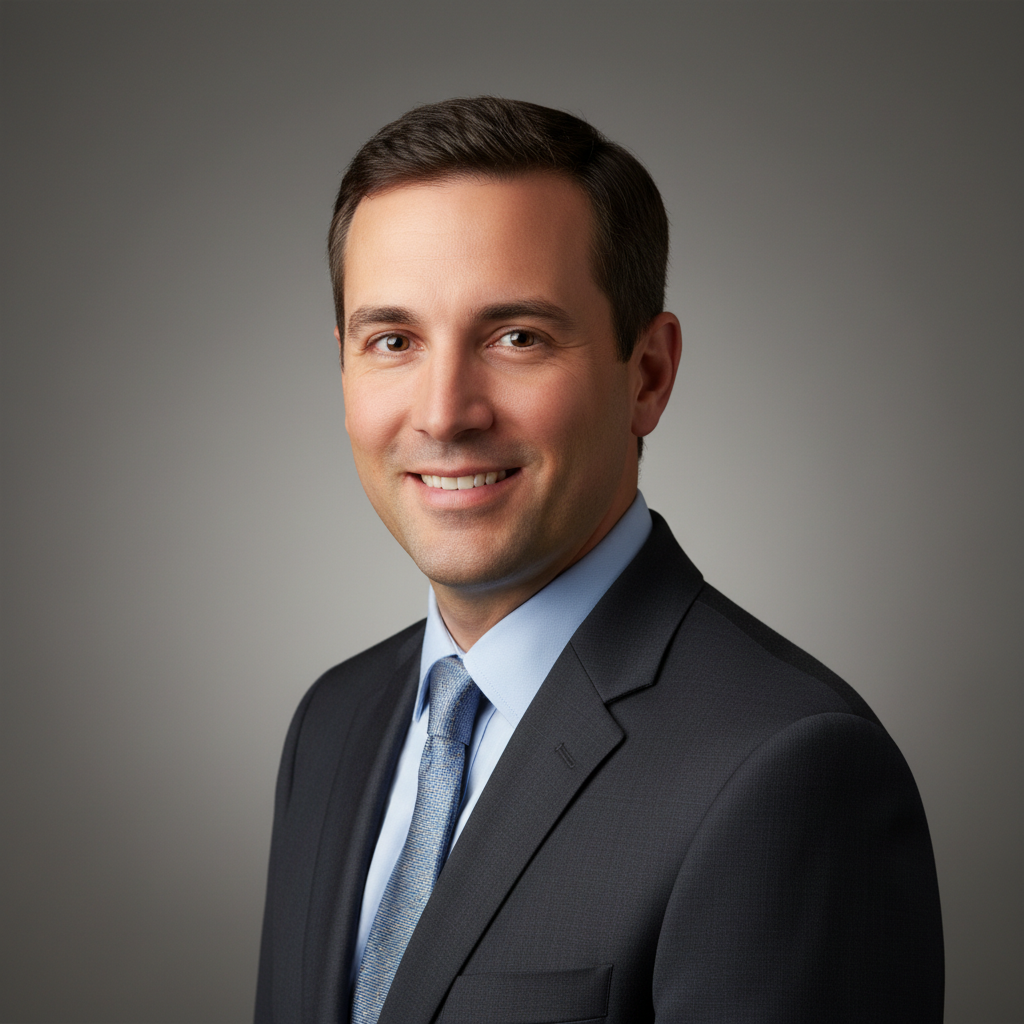
Crosetti explains Tapia's rise in elite padel
Behind every major career in elite sport, there are people who provide direction at decisive moments. In Agustin Tapia's case, Pablo Crosetti is one of those key figures. Now technical director at the Aurial Padel Academy, Crosetti supported the Argentinian during an early stage when raw talent was not enough and many fundamentals still had to be built. In a detailed interview, he reflects on that shared period and explains how a highly gifted teenager turned into a dominant professional capable of staying at the top of the world rankings across multiple seasons.
Arrival in Spain and a bond of trust
When Tapia moved to Spain, the step was bold in sporting terms and demanding on a personal level. He left his familiar environment, had to adapt to a new setting, and at the same time handle the routine of an emerging pro. During that period, Crosetti was more than a coach: he became a stable reference point combining training structure with daily support. Their collaboration developed into a close relationship that went beyond a standard coach-player dynamic. That closeness helps explain why Crosetti still describes a lasting bond even after their professional paths evolved.
In padel, where top-level maturity depends not only on shot quality but also on decision-making, pair chemistry and consistency, such early relationships are often crucial. Crosetti portrays the young Tapia as eager to learn, emotionally intense and highly ambitious. At the same time, he says the player had to build many off-court foundations step by step: daily organization, load management, recovery, and the ability to balance competitive pressure with personal stability. That growth was not secondary; it was a central pillar of his later breakthrough.
From raw talent to repeated world number one
The numbers from recent years underline that trajectory. Tapia has reached world number one repeatedly and accumulated an impressive total of titles and finals in a short span. Yet Crosetti focuses less on statistics and more on the quality of the transformation. A spectacular attacking player became a complete professional with sharper match management, better choices in pressure phases and stronger mental balance. This combination, in his view, explains why Tapia can do more than win isolated tournaments and instead shape entire seasons.
In modern padel, brilliance in individual points is no longer enough by itself. What matters is sustained performance across changing conditions: indoor or outdoor events, faster or slower courts, tricky early rounds and high-pressure late matches. Crosetti sees Tapia's progress in his ability to adapt to all these factors without losing his identity. The Argentinian has remained offensive while learning to time risks better and set the right priorities in key moments.
Playing through pain as a turning point
From the coach's perspective, the period marked by physical issues during the 2025 season was especially defining. According to Crosetti, Tapia had to learn how to compete through pain without sacrificing decision quality. That phase showed that world-class performance is not built only in ideal conditions. Very often, level is revealed when a player, under constraints, still finds solutions, stabilizes his pair and makes clear decisions at decisive points.
These remarks point to mental development that is rarely linear in elite sport. Delivering consistently under strain requires clear routines, a reliable support environment and the willingness to accept short-term frustration without overreacting. Crosetti describes exactly that ability as the core of Tapia's present strength. The player learned to treat resistance as part of the process while preserving his demand for top performance.
Partnership stability as the key lever
Another major part of the analysis concerns pair dynamics on the pro circuit. Crosetti notes that many duos split after early difficulties. By contrast, the success of top teams is built on continuity. This applies especially to Tapia and Arturo Coello, but also to Ale Galan and Federico Chingotto. In his view, both pairs committed to long-term projects instead of reacting to every short fluctuation.
- Stable partnerships improve synchronization in tight situations.
- Clear role distribution reduces tactical uncertainty on pressure points.
- Shared crisis experience strengthens trust for late tournament rounds.
- Long-term processes increase the likelihood of sustained title runs.
This perspective matches the current hierarchy at the top. The leading pairs appear not only technically superior in decisive phases, but also more structured. They respond to setbacks with clarity, keep their match plan stable, and punish small dips from opponents efficiently. Crosetti therefore sends an implicit message to the chasing field: being close to the top is not enough if the final layer of execution is missing when matches tighten.
Reading the current competitive landscape
Crosetti explains Tapia's ongoing dominance not through talent alone, but through the sum of development, resilience and pair stability. The gap to rivals is not impossible to close, yet it likely requires two things at the same time: reduced dominance from the top pairs and a clear rise in level from the challengers. Until both happen together, major titles will remain concentrated among the current leaders.
The profile therefore offers more than a nostalgic look back at a star's beginnings. It provides a realistic model of how top-level padel careers are built: early guidance, durable relationships, learning under stress and the strategic value of long-term partnerships. Crosetti's insights give Tapia's success a clear internal structure and show why his results are not based on short-lived form peaks.